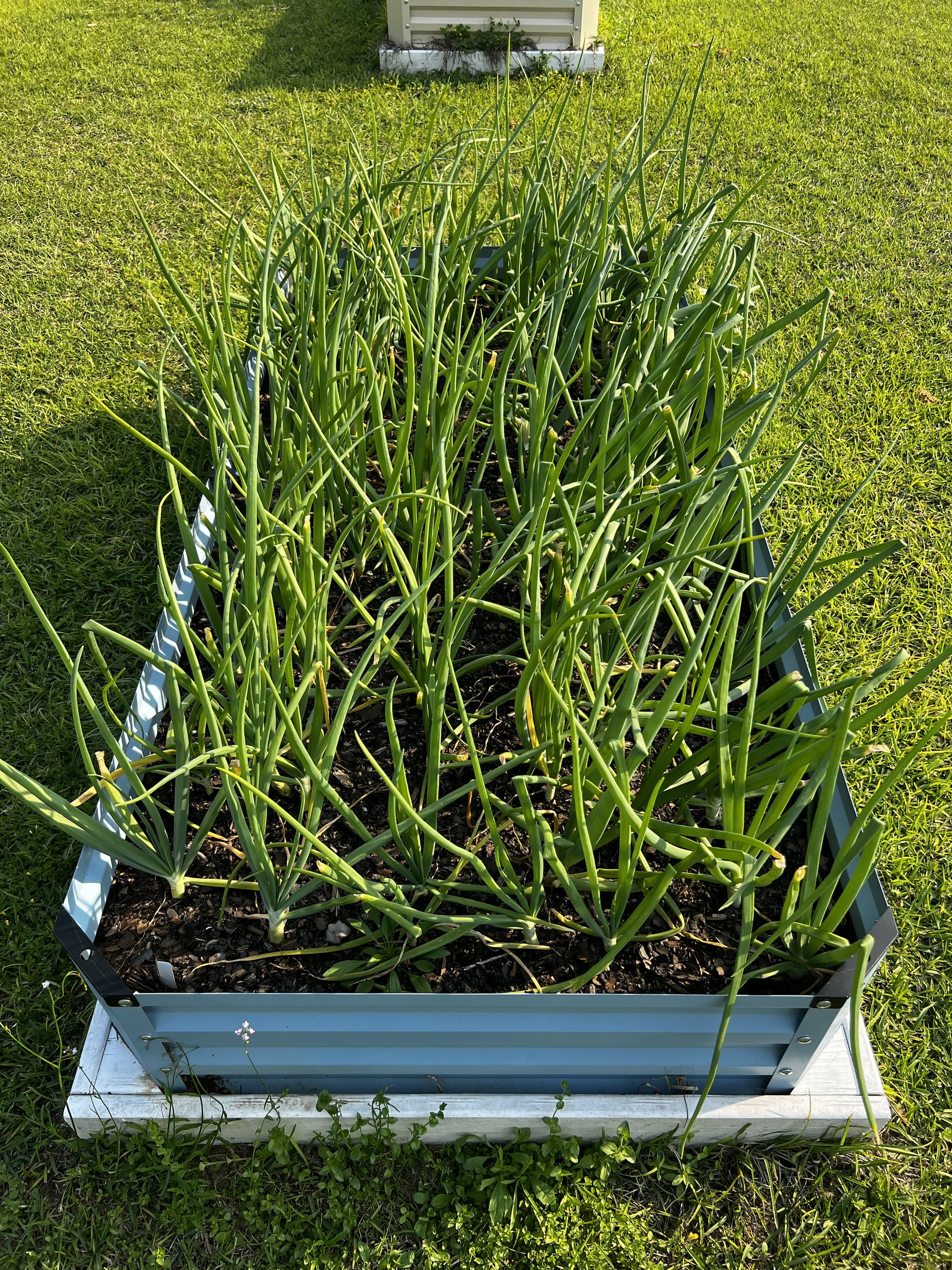
Back in December, we planted around 150 onion plants — our first time ever growing them. From what we had heard, onions can be a bit fussy here in North Florida. The climate, the soil, the humidity — it all works against you if you pick the wrong variety or let things slide for a week or two. But we like a good challenge, and nothing beats the taste of a homegrown onion pulled fresh from the soil.
Here is what we learned, what went wrong, and what we would do differently. Hopefully it saves you some of the heartache.
Choosing the Right Variety
This is the most important decision you will make, and it comes down to one thing: day length. Onions form bulbs in response to the number of daylight hours they receive. Plant the wrong type for your latitude and you will get beautiful green tops with almost no bulb underneath.
There are three categories:
10 to 12 Hours
The right choice for North Florida and the Southern states. These start bulbing with shorter days, which matches our late winter and spring growing window.
✓ Plant This12 to 14 Hours
Better suited for the central United States. Can work in the transition zones but not reliable this far south.
14 to 16 Hours
These need the long summer days up north. Planted in Florida, they will grow tops but never form a proper bulb.
We went with a mix of white, purple, and yellow short-day onions sourced from Vidalia, Georgia — the sweet onion capital of the Southeast. Vidalia onions are famous for their mild flavor, which comes largely from the low-sulfur soil there. Our Jefferson County soil is a bit different, but we are hoping for something in the neighborhood of a Monticello Mild.
Look for variety names like Granex, Texas Grano, or any onion explicitly labeled "short-day" when shopping for transplants or seed. Most local feed stores in North Florida will carry the right types in late fall and early winter.
When and How to Plant
In North Florida, onions are a cool-season crop. The goal is to get them in the ground in late fall or early winter — November through January — so they can establish and grow tops before the warm days of spring trigger bulbing.
-
Timing Plant transplants or sets between November and January. Starting too late means the bulbing signal arrives before the plant is big enough to produce a good-sized onion.
-
Sun Onions need full sun — at least 6 to 8 hours a day. Do not tuck them in a partly shaded bed and expect much.
-
Watering Consistent moisture matters, especially during early growth. Irregular watering can stress the plant and reduce bulb size. Water at the base, not overhead.
-
Spacing Give them room. Four to six inches between plants minimum. Crowded onions mean poor airflow, which is an open invitation for fungal problems.
-
Soil Onions prefer loose, well-draining soil with a slightly acidic pH around 6.0 to 6.8. Amend heavy or compacted soil with compost before planting.
Why You Need to Trim the Tops
This one surprised us. When the plants were young we read that trimming the green tops — cutting them back to about six to eight inches — actually benefits the plant. We did it once early on and the plants responded well.
Then life got busy. We skipped a few weeks. Some of the plants pushed two feet high and started flopping over. That is when the trouble started.
Once an onion's neck bends or breaks, that bulb is done growing. A broken neck cuts off the energy transfer from the leaves to the bulb. If you notice plants falling over, get in there and trim immediately — do not wait.
Benefits of Regular Trimming
-
Better airflow Tall, dense tops trap moisture and create the warm, humid conditions that fungal diseases love.
-
More light Cutting back the tops lets sunlight reach the base of the plant and the soil around it, which helps dry things out between waterings.
-
Prevents top-heaviness Heavy tops in a Florida afternoon storm or a windy day will bend and break necks. Keep them trimmed and they stay upright.
Aim to trim every two to three weeks once tops reach about a foot tall. Cut back to six to eight inches. It feels wrong at first, but the plant will thank you.
Dealing With Onion Rust
The morning I walked out and saw it, I knew something was wrong before I even got close. Small clusters of yellow-orange powdery spots on the leaves — scattered across half the bed. Classic onion rust.
Onion rust is a fungal disease caused by Puccinia allii. It thrives in warm, humid conditions — which is essentially a North Florida spring in a nutshell. The spores travel by wind and splashing water, settling on the leaves and multiplying fast. Once established, rust drains the plant's energy, reduces bulb development, and left unchecked it can take down an entire bed.
What It Looks Like
Early stage: small pale yellow flecks or streaks on the leaf surface. Within a few days those flecks turn into raised orange-brown pustules — the spore masses. In humid weather the progression from first sign to serious infection can happen in under a week. If you see it, act that day.
Prevention Tips
Most of what prevents rust is just good growing practice. None of it is complicated, but it is easy to let slide when things get busy.
-
Space them well Crowded plants cannot dry out between watering or rain events. Poor airflow is the number one contributor to fungal problems in the onion bed.
-
Trim regularly As covered above — keep those tops in check. Dense, overgrown tops hold moisture and block airflow right where you need it most.
-
Water at the base Overhead watering splashes soil and spores up onto the leaves. Use drip irrigation or water carefully at the root zone and keep the foliage dry.
-
Rotate your crops Do not plant onions — or anything in the allium family — in the same spot two years running. Rust spores overwinter in the soil. Move them to a fresh bed each season.
-
Clean up after harvest Remove all plant debris from the bed after you pull your onions. Leaving old tops and roots behind gives spores a place to survive until next season.
Treatment: What We Used
Once we spotted the rust, here is the order of operations we followed:
-
Remove all infected leaves Go through every plant by hand and cut off any leaf showing spots, pustules, or discoloration. Do not compost them — bag them and throw them away. You do not want those spores cycling back into your garden.
-
Trim everything back While we were in there, we trimmed all the plants back to a healthy height — improving airflow across the whole bed at once.
-
Apply a fungicide We used Azoxystrobin, a systemic fungicide effective against rust and a wide range of other fungal diseases. It works by interrupting the fungus's ability to produce energy, stopping the spread and protecting healthy tissue. Follow label directions for dilution and application intervals.
Within a week of treatment the plants were looking noticeably better. New growth came in clean, and the remaining leaves stopped showing new pustules. We kept a close eye on them and did a second application two weeks later as a precaution. It is not a magic fix — caught early, treatment works well. Let it go too long and you are fighting an uphill battle.
Knowing When to Harvest
We are still working toward this part ourselves, but here is what to watch for as your onions near maturity in late spring.
-
Tops falling over naturally When about half the tops in the bed have fallen over on their own, it is a sign the bulbs have finished sizing up and are starting to cure. This is different from tops falling due to weight or disease — natural fall-over happens gradually across the bed.
-
Neck feels soft Gently squeeze just above the bulb. A soft, slightly dried neck means the onion is ready. A firm green neck means it needs more time.
-
Cure before storing After pulling, lay the onions out in a single layer in a warm, dry, well-ventilated spot — out of direct sun — for two to three weeks. This dries the outer skin and extends storage life significantly.
Gardening in North Florida is humbling, rewarding, and never boring. We are learning something new every season and sharing it here as we go. If you have grown onions in Jefferson County and have tips we missed, we would love to hear from you at the stand.